Author: Marie Crawley
Marie Crawley an Associate from our Clacton office explains what it means to live on a public highway or a private road and what to look out for
Most people will generally live on what is classed as an adopted highway. This is a public street, maintained by the local authority, sometimes referred to as being maintained at public expense i.e. by the council.
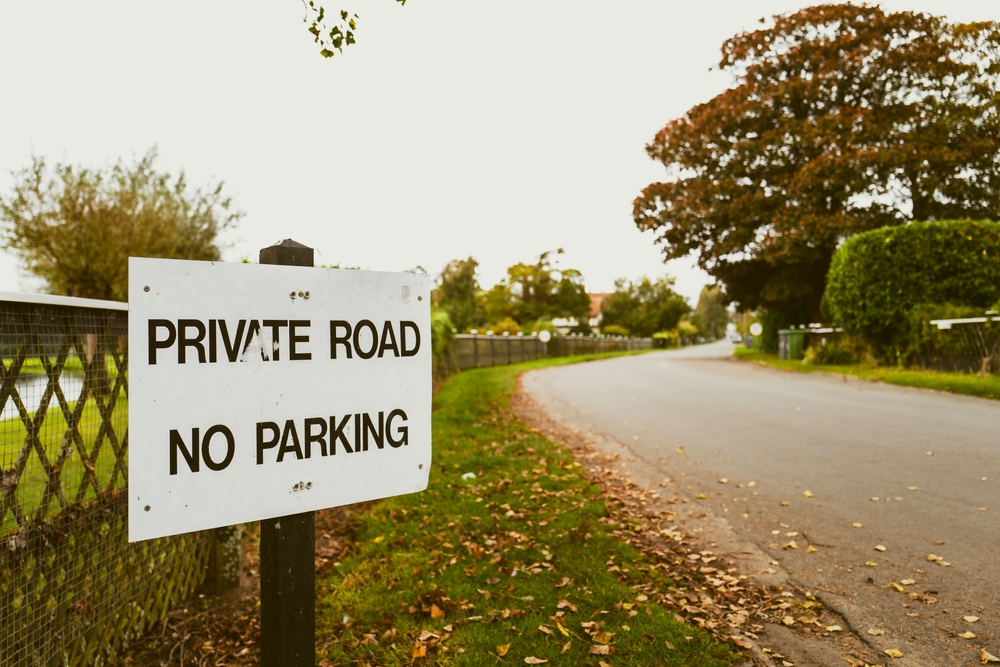
However, it is possible to live on a private road. A private road is just that, privately owned. No automatic public rights of way exist and the local authority are under no obligation to carry out any maintenance. As such, the maintenance of the private road must be carried out by the residents who live along it. It is also possible in these situations that the property may not have been granted a specific legal right to use this road. It is usually very difficult to trace the owners of these roads at this stage and so your conveyancer will seek to put an absence of easement indemnity insurance policy in place to resolve this issue.
There is also a third classification of roadway, known as a private street. This is where public rights of way exist although the local authority are still under no obligation to maintain the road. The difference between a private road and a private street is that the local authority may choose to carry out repairs or improvements to a private street but is likely to then approach the residents for reimbursement.
There has recently been a rise in popularity of a slightly new situation. This situation is where new roads being built by developers are intended to remain private and the developer will put a management company in place, who are responsible for the maintenance of the private roads. The residents of the road will usually be granted a legal right to use the road in their title deeds and will reimburse the management company for any monies spent on the road maintenance via a monthly service charge.
When you purchase a property, your conveyancer will carry out a local authority search. The result of this search will reveal the situation with your road. If the road is classed as an adopted highway, that will usually be the end of the matter. However, if the search reveals the road upon which your property abuts is not adopted by the local authority, then your conveyancer will need to carry out further investigation to see which of the above scenarios applies.
Please note this article is provided for general information purposes only to clients and friends of Hayward Moon Limited. It is not intended to impart legal advice on any matter. Specialist advice should be taken in relation to specific circumstances. Whilst we endeavour to ensure that the information in this article is correct, no warranty, express or implied, is given as to its accuracy, and Hayward Moon Limited does not accept any liability for error or omission.